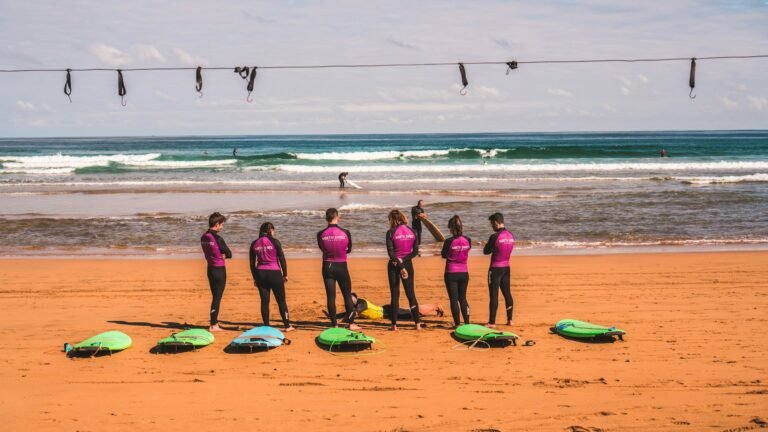



Standing on the beach, watching surfers glide across perfect Moroccan waves, you feel that magnetic pull. You want to try it. But where do you start? What should you know before your first surf lesson in Taghazout?
If you’re dreaming of catching your first wave in Morocco’s legendary surf village, you’ve found the right guide. As local surf instructors who’ve taught thousands of first-timers, we know exactly what makes a first surf experience incredible—and what mistakes beginners make before they even hit the water.
This complete guide walks you through everything you need to know for your first time surfing in Taghazout, from choosing the right lesson to standing up on your very first wave.
Table of Contents
Before You Book: What Makes Taghazout Perfect for First-Time Surfers

Let’s start with the most important question: Why choose Taghazout for your first surf experience?
The Perfect Learning Waves
Taghazout offers something many famous surf destinations don’t: dedicated beginner surf spots with gentle, consistent waves specifically suited for learning.
Banana Beach – Our go-to spot for first-timers. This sandy-bottomed beach produces rolling 1-3 foot waves that break slowly and predictably. You won’t find powerful closeouts or scary drops—just perfect learning conditions.
Panoramas Beach – Right in Taghazout village, offering easy-access waves that build confidence without overwhelming beginners.
These spots work year-round, meaning whenever you visit Taghazout, there’s a safe place for you to learn.
Year-Round Sunshine = Comfortable Learning
Nothing kills surf stoke faster than shivering in cold water or dealing with rain. Taghazout enjoys 330+ days of sunshine annually with:
- Water temperature: 16-20°C (comfortable with a wetsuit)
- Air temperature: 18-25°C most of the year
- Minimal rain: Especially May through October
- Warm sand: Perfect for beach theory lessons
You’ll focus on learning to surf, not surviving the cold.
Experienced Local Instructors Who’ve Taught Thousands
Taghazout’s surf schools employ certified instructors (ISA and Royal Moroccan Surfing Federation) with years of experience teaching complete beginners.
Your instructor has likely taught hundreds of first-timers and knows:
- Exactly how to position you for the easiest waves
- How to read your body language when you’re nervous
- The perfect progression pace for day one
- Ocean safety specific to Taghazout’s beaches
Incredibly Affordable First Lessons
Your first surf lesson in Taghazout costs €30-50 for a 2-hour group session (everything included). Compare that to €80-120 in California, Australia, or Europe.
This affordability means you can commit to 3-5 lessons—the sweet spot for actually learning to surf rather than just trying it once.
What to Expect: Your First Surf Lesson Step-by-Step
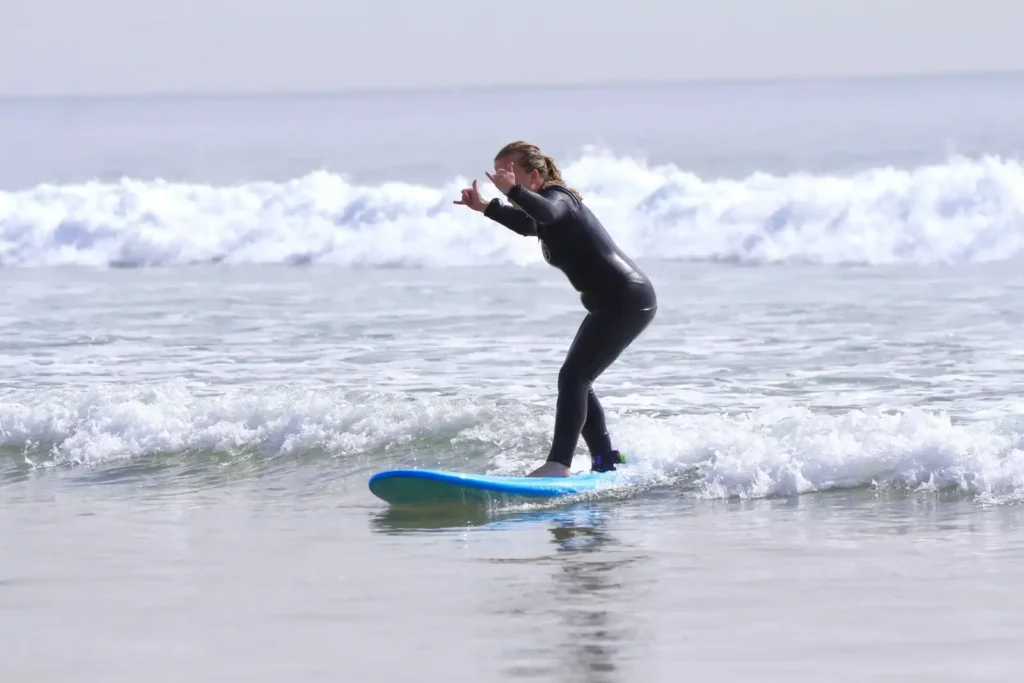
Let’s walk through exactly what happens during your first surf lesson in Taghazout so you know what to expect.
Morning of Your Lesson:
8:30-9:00 AM – Pickup Your surf school picks you up from your accommodation in Taghazout, Tamraght, or Agadir. The early start means you catch the best conditions—glassy water and lighter winds.
9:15 AM – Arrival at the Beach Your instructor checks the conditions at multiple spots and chooses the best one for beginners that day. This spot selection is crucial—it’s why you hired a professional.
On the Beach (30-40 minutes)
9:20 AM – Meet Your Group You’ll join 3-5 other beginners (quality schools keep groups small). Everyone’s nervous, excited, and in the same boat—literally learning together.
9:25 AM – Getting Your Equipment Your instructor fits you with:
- Wetsuit – Appropriate thickness for the season (3/2mm or 4/3mm)
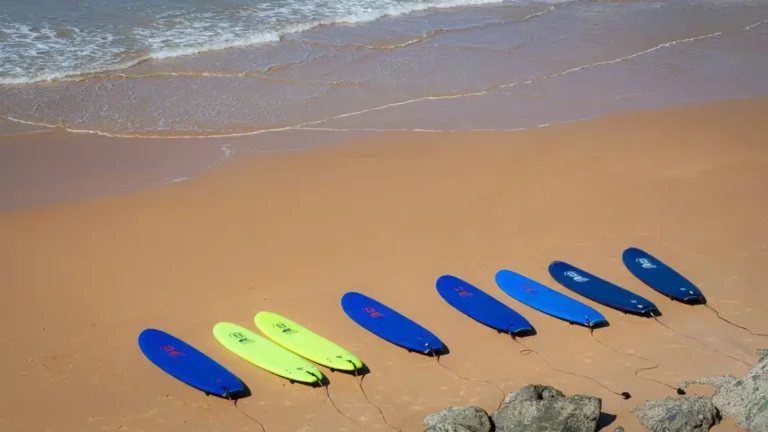
- Softboard – Large, stable foam board perfect for learning (usually 7-9 feet)
- Optional rashguard – Extra comfort and sun protection
9:35 AM – Beach Safety Briefing Your instructor covers essential ocean safety:
- How to spot and avoid rip currents (they’ll point them out)
- What to do if you fall off (relax, surface, find your board)
- Hand signals for communicating in the water
- Emergency procedures (though problems are extremely rare)
This isn’t meant to scare you—it’s about giving you knowledge that builds confidence.
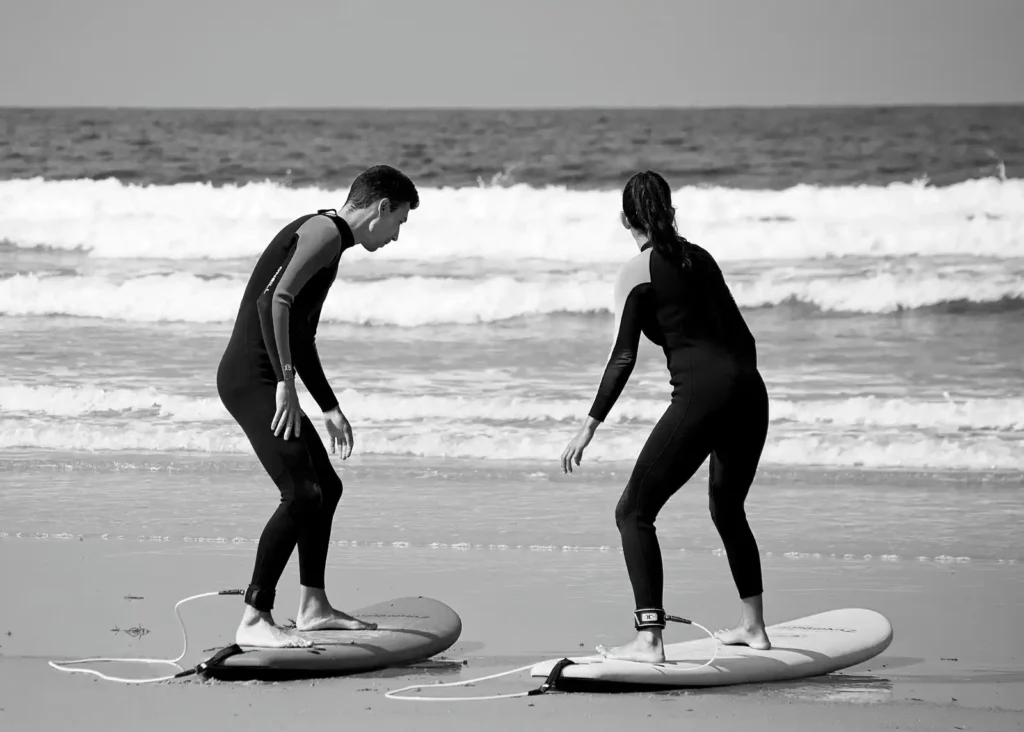
9:45 AM – Surfing Fundamentals on Dry Land
Now the fun begins. On the sand, you’ll practice:
1. Proper Board Position
- Lying centered on the board (not too far forward or back)
- Finding your “sweet spot” for balance
- Correct paddling position with chest slightly raised
2. Paddling Technique
- Long, deep strokes (not splashing)
- Rhythm and breathing
- Looking ahead, not down
3. The Pop-Up Movement This is the most important skill. Your instructor breaks it down:
- Hands placement (beside your chest, not under shoulders)
- Explosive push-up motion
- Bringing feet forward (back foot first, then front)
- Landing in a stable surf stance
You’ll practice this 20-30 times on the sand until it feels somewhat natural.
4. Surf Stance
- Feet shoulder-width apart
- Knees bent
- Weight centered
- Arms out for balance
- Eyes looking forward (not at your feet!)
10:15 AM – Warm-Up Exercises Quick stretching to prepare your shoulders, back, and legs for paddling and popping up.
In the Water (60-90 minutes)
10:25 AM – Entering the Water
Your instructor leads you into the ocean, starting in shallow water (waist-deep). The softboard floats easily, and the wetsuit provides buoyancy.
10:30 AM – Catching Your First Waves (Whitewater)
Here’s what actually happens:
Wave 1-3: Your instructor holds your board, lines you up with incoming whitewater (broken waves), tells you when to paddle, and gives you a gentle push into the wave.
You ride on your stomach, just feeling the wave’s power carrying you toward shore. This is normal and important—you’re learning timing and wave reading.
Wave 4-6: Same process, but now you attempt the pop-up. Most first-timers don’t stand fully on these early attempts. You might:
- Get halfway up and fall
- Get one foot on the board
- Stand for 1-2 seconds before tumbling
This is perfect progress. Every attempt teaches your muscles and brain.
Wave 7-10: The magic starts happening. Your pop-up timing improves. You start feeling when to push up. You might ride a wave for 5-10 seconds standing.
Wave 11-15: You’re getting it! The movements click. You catch waves, pop up, and ride toward shore, arms out for balance, pure stoke on your face.
Your instructor stays beside you the entire time, providing:
- Real-time feedback (“pop up faster!” “look forward!” “bend your knees!”)
- Wave positioning (putting you in the perfect spot)
- Safety oversight (watching other surfers and ocean conditions)
- Encouragement and celebration of every success
11:45 AM – Taking a Break
After about 60-75 minutes in the water, you paddle in. Your arms are tired, you’re grinning, and you’ve caught 12-20 waves (even if you only stood on 4-5).
After Your Session
12:00 PM – Debrief and Q&A
Back on the beach:
- Your instructor reviews what went well
- Addresses questions (“Why do I keep falling left?”)
- Explains what to practice for next lesson
- Some schools offer video review of your attempts
12:15 PM – Return Transport
The van drops you back at your accommodation. You’re exhausted, happy, and already thinking about tomorrow’s lesson.
Realistic First-Day Expectations: How Many Waves Will You Catch?
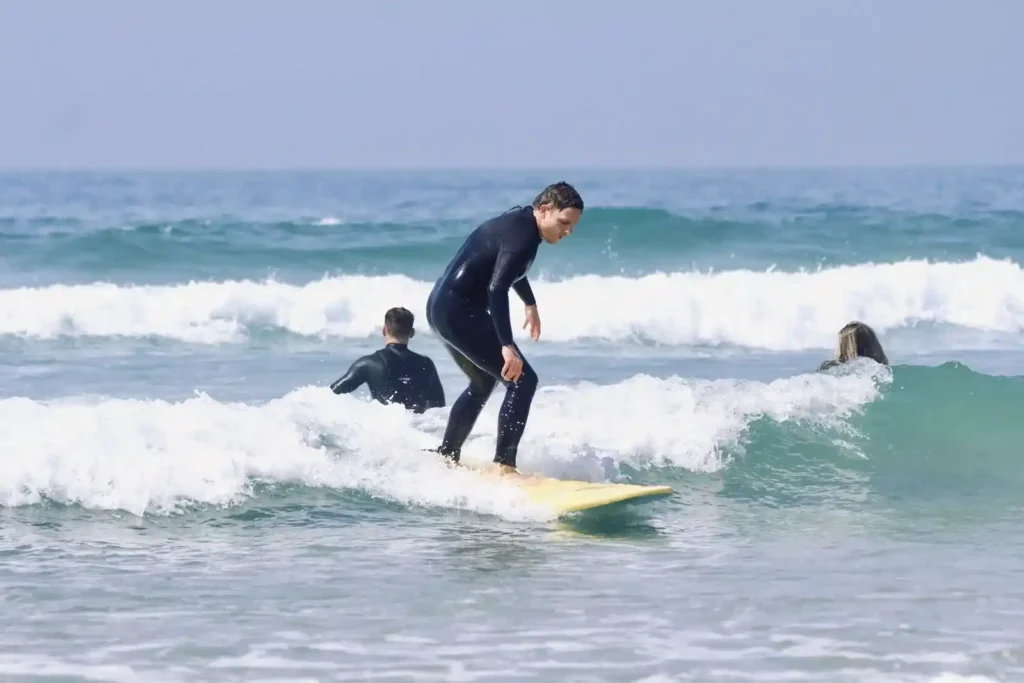
Let’s be honest about what happens on day one, so you have realistic expectations:
Wave Count: 15-25 Attempts
In a typical 75-minute water session, you’ll attempt to catch 15-25 waves. Not all will be successful, and that’s completely normal.
Standing Up: 20-40% Success Rate
Absolute beginners: Stand up on 2-5 waves (20-30% of attempts) Athletic/fit beginners: Stand up on 5-10 waves (30-40% of attempts) Returning beginners: (tried once years ago) Stand up on 7-12 waves (40%+ of attempts)
These numbers are averages from thousands of first-timers we’ve taught. Some people stand up on their very first wave. Others take 15 attempts. Both are totally normal.
Ride Duration: 3-8 Seconds
Your first successful rides last 3-8 seconds before you fall. That might sound short, but when you’re standing on a moving surfboard for the first time, 5 seconds feels like an eternity.
Most Common First-Day Experiences
What usually goes well:
- Catching waves (instructor helps with this)
- Feeling the wave’s power
- Understanding the basic movements
- Having an absolute blast
What’s usually challenging:
- Timing the pop-up correctly
- Maintaining balance while standing
- Knowing where to look (hint: forward, not at feet!)
- Building upper body endurance
Everyone’s Challenge: Falling off repeatedly. You’ll fall 20+ times. Expect it, embrace it, laugh about it.
Essential Tips from Local Instructors: Make Your First Lesson Amazing
These insider tips come from teaching thousands of first-timers in Taghazout:
The Week Before Your Lesson
1. Practice Swimming You don’t need to be Michael Phelps, but comfortable swimming ability is essential for safety and confidence. If you can swim 50 meters without stopping, you’re fine.
2. Work on Upper Body Strength (Optional but Helpful) Paddling uses shoulders, back, and arms intensely. Simple exercises:
- Push-ups: 3 sets of 10
- Planks: 3 x 30-second holds
- Arm circles: 2 minutes
Don’t stress if you’re not fit—surfing builds surf fitness. But a little preparation helps prevent exhaustion.
3. Visualize the Pop-Up Watch YouTube videos of beginner surf pop-ups. Seeing the movement helps your brain prepare. Practice the motion on your living room floor a few times.
The Night Before
1. Get Good Sleep Surfing is more tiring than you expect. Sleep 7-8 hours so you have energy and focus.
2. Hydrate Well Drink plenty of water the evening before. Dehydration + sun + exercise = exhaustion.
3. Pack Your Bag
- Swimsuit (wear under wetsuit)
- Towel
- Sunscreen (SPF 50, mineral-based reef-safe)
- Water bottle
- Change of clothes
- Small snack for after
4. Eat a Light Breakfast Don’t surf on a full stomach (you’ll feel sick). Have something light 1-2 hours before: banana, toast, yogurt.
During Your Lesson
1. Tell Your Instructor About Any Concerns Nervous? Bad shoulder? Not a strong swimmer? Tell them. They’ll adjust their approach to keep you safe and comfortable.
2. Listen Completely Before Asking Questions Your instructor gives instructions in a specific order for a reason. Listen first, then ask clarifying questions.
3. Don’t Compare Yourself to Others Someone in your group will pick it up faster. Someone else will struggle more than you. Focus on YOUR progression, not theirs.
4. Celebrate Small Wins Caught a wave on your stomach? Success! Stood up for 2 seconds? Amazing! Got both feet on the board? Incredible! Every step forward matters.
5. Ask “Why?” When You Don’t Understand
- “Why do I keep falling left?”
- “Why do my hands go there specifically?”
- “Why do we paddle to this spot?”
Understanding the “why” accelerates learning.
6. Rest When Tired If your arms are spent or you’re out of breath, tell your instructor. Taking a 5-minute break prevents injuries and lets you finish strong.
After Your Lesson
1. Hydrate and Eat Your body just worked hard. Drink water and eat a proper meal within an hour.
2. Stretch Gentle stretching prevents soreness. Focus on shoulders, back, and legs.
3. Reflect on What Worked What felt good? When did you stand up? What were you thinking/doing? This reflection helps your next session.
4. Book Lesson #2 Immediately Strike while the iron’s hot. Book your next lesson for the following day or as soon as possible. Consistency accelerates learning dramatically.
Common First-Timer Questions Answered
“What if I can’t stand up at all?”
Very unlikely, but even if you don’t stand on day one, you’ll:
- Feel the wave power
- Practice paddling and positioning
- Build ocean confidence
- Learn what NOT to do
- Have fun trying
Plus, day two almost always brings breakthroughs. The muscle memory from day one makes day two much easier.
“Will I be the worst one in my group?”
Everyone worries about this. Here’s the truth: in every group, someone learns fastest and someone learns slowest. It. Doesn’t. Matter.
Your instructor doesn’t judge. Your group-mates don’t care (they’re focused on themselves). And most importantly, this isn’t a competition—it’s your personal surf journey.
“What if I’m scared of the ocean?”
Totally valid. Many first-timers have ocean anxiety. Tell your instructor immediately. They’ll:
- Start you in shallower water
- Explain everything before it happens
- Stay very close to you
- Go at your pace, not the group’s pace
- Help you build confidence gradually
We’ve taught people terrified of the ocean who now surf regularly. Fear is normal. Facing it with expert guidance is how you overcome it.
“I’m not very fit—will I be able to do this?”
If you can walk along the beach and swim a bit, you can learn to surf. The beauty of beginner lessons is that they’re tailored to your fitness level.
You might get tired faster than fitter people, but your instructor adjusts. Take more breaks. Catch fewer waves but make them count. Quality over quantity.
“Can I take a lesson alone?”
Absolutely! Many people take their first lesson solo. Benefits:
- 100% instructor attention
- Go at your exact pace
- Ask unlimited questions
- More expensive but faster learning
However, group lessons offer social energy, shared stoke, and new friends. Both options work great.
“What if the waves are too big that day?”
Your instructor will never take beginners to waves beyond their ability. If the main beginner spots have larger swell, they’ll:
- Find a more protected beach
- Choose spots with smaller waves
- Wait for the right tide to calm conditions
- Reschedule if conditions are genuinely unsafe
Trust their judgment. They know the local beaches intimately.
After Your First Lesson: What Comes Next?
Your first surf lesson plants a seed. What you do next determines whether it grows.
The Recommended Learning Path
Day 1: First lesson—standing up on whitewater
Day 2: Second lesson—standing up consistently, starting to ride waves further
Day 3: Third lesson—basic turning, riding unbroken green faces
Day 4: Rest day (your body needs recovery)
Day 5-6: Lessons 4-5—linking multiple maneuvers, longer rides
Day 7: Final lesson or rest day
This progression (5 lessons over 7 days) gives most people solid foundational surfing skills.
Book Multi-Day Packages
Instead of paying per lesson (€40-50), book 5-lesson packages (€175-250) to:
- Save €25-50 total
- Guarantee your instructor continuity
- Commit to the learning process
- Track your progression systematically
Continue Practicing
If you’re in Taghazout for 2+ weeks, rent equipment (€15-20/day) between lessons to practice what you’ve learned. More time in the water = faster improvement.
What to Do Right Now
You’ve read this far, which means you’re serious about learning to surf. Here’s your next step:
Choose Your Surf School Wisely
Look for schools offering:
- ✅ Small groups (maximum 6 students per instructor)
- ✅ Certified instructors (ISA or Royal Moroccan Federation)
- ✅ Multiple beach options (adapting to daily conditions)
- ✅ Quality equipment (well-maintained softboards and wetsuits)
- ✅ Transparent pricing (no hidden fees)
- ✅ Positive reviews from other beginners
Book Your First Lesson
The absolute best time to learn is NOW. Whether you’re planning a trip next month or next year, book your lessons in advance (especially October-March peak season).
Ready to catch your first wave in Taghazout?
Our local surf instructors specialize in teaching complete beginners in the safest, most fun way possible. We keep groups small, choose the perfect beach daily, and celebrate every single wave you catch.
📧 Email us: Booking@taghazoutsurflessons.com
🌐 Book online: taghazoutsurflessons.com/booking/
Your First Wave Awaits
Surfing for the first time in Taghazout isn’t just about standing on a board—it’s about connecting with the ocean, challenging yourself, and experiencing pure joy.
That moment when you catch your first wave, pop up successfully, and ride it toward shore while the sun warms your face and the Moroccan coastline stretches before you… that’s a moment you’ll remember forever.
Every surfer started exactly where you are right now: on the beach, looking at the waves, wondering “can I do this?”
The answer is yes. With the right instruction, the perfect beginner waves of Taghazout, and the courage to try, you’ll be surfing.
Your first wave is waiting. Let’s make it happen.
FAQ: First-Time Surfing in Taghazout
How long is a typical first surf lesson? 2 hours total: 30-40 minutes beach theory and practice, 75-90 minutes in the water.
What should I bring? Just swimwear, towel, sunscreen, and water. We provide all surf equipment and wetsuits.
Can I learn if I’m 40/50/60 years old? Absolutely! We regularly teach people in their 40s-60s. Age matters far less than attitude and basic fitness.
Is it safe for solo female travelers? Very safe. Taghazout has a strong surf tourism culture. Many women take solo surf lessons here successfully.
What’s the best time of year for first-timers? June-September offers the smallest, gentlest waves—perfect for learning. October-May works too but with slightly larger swells.
Will I be sore after my first lesson? Yes, expect shoulder and core soreness. It’s normal and lessens after 2-3 sessions as your muscles adapt.
Can I take photos/videos during my lesson? Your instructor focuses on teaching, not photography. Many schools offer photo packages, or bring a waterproof phone case for beach shots.
What if I need to cancel my lesson? Reputable schools offer free cancellation 24 hours in advance. Always check cancellation policies when booking.
Have more questions about your first surf lesson in Taghazout? Drop a comment below or contact us directly. We’re here to help you catch your first wave!