

Surfing for Beginners: Learning to surf is one of the most exciting decisions you’ll ever make. The ocean, the waves, the feeling of gliding across the water — there’s nothing quite like it. But before you rush in headfirst, knowing a few fundamentals can make the difference between a frustrating experience and an unforgettable one.
At TSL Surf Taghazout, we’ve helped hundreds of first-time surfers go from nervous beginners to confident wave-riders. In this guide, we’re sharing our 10 most important tips for surfing beginners — everything you need to know before your first session in the water.
Whether you’re planning a surf holiday or live near the coast, these tips will help you progress faster, stay safer, and enjoy every moment.
What You’ll Learn in This Guide
- How to choose the right board as a beginner
- Which waves and beaches are safest to start on
- How to pop up correctly from the very first try
- Essential ocean safety rules every beginner must know
- Why taking a surf lesson accelerates your progress
- Gear, warm-ups, and mindset tips pros swear by
Table of Contents
Tip 1: Choose the Right Surfboard for Beginners

The biggest mistake beginners make is grabbing a board that looks cool rather than one that actually works for their level. When you’re just starting out, size and volume are your best friends.
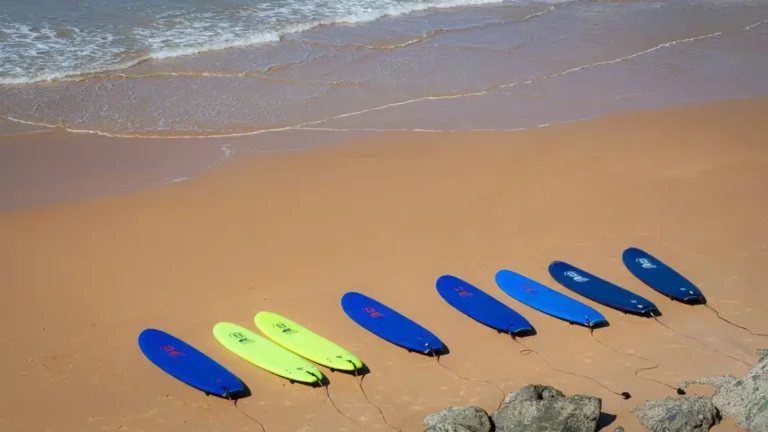
Beginner surfers should ride a foam board (softop) or longboard between 8 and 9 feet long. These boards are wider, thicker, and more buoyant — meaning they catch waves easily and keep you stable while you find your balance.
Short, thin boards are designed for experienced surfers who generate their own speed. As a beginner, you need the wave to do the work, and a bigger board lets that happen.
What to look for in a beginner surfboard:
- Length: 8–9 feet
- Material: Foam (softop) for safety and stability
- Width: 22 inches or more
- Volume: 70+ liters
At TSL Surf School, all our beginner lessons use foam boards specifically selected for your height and weight. Trust the process — the right board will have you standing up on your very first day.
Tip 2: Pick the Right Beach and Surf Spot
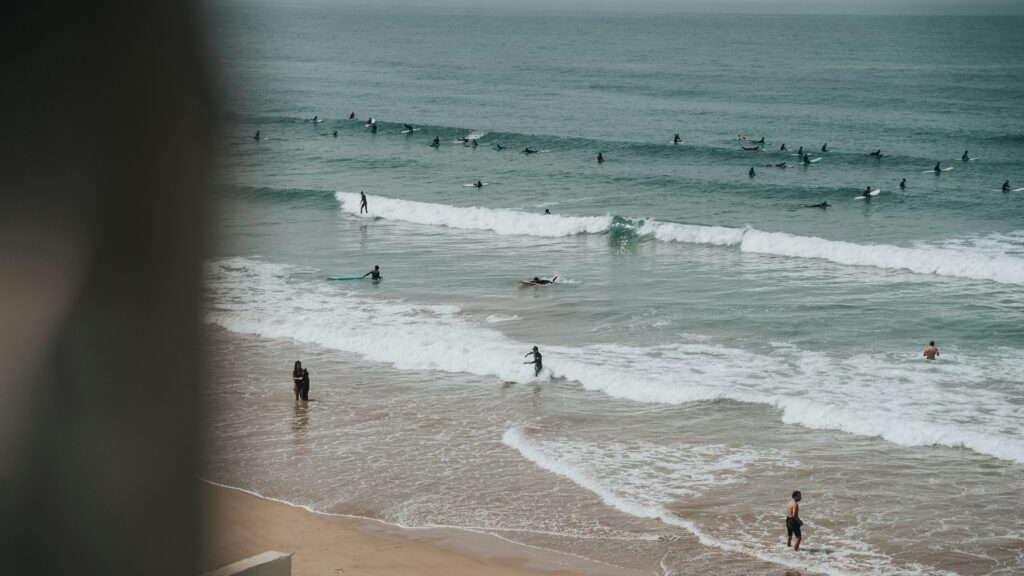
Not all waves are beginner-friendly, and choosing the wrong surf spot can be discouraging — or even dangerous. As someone new to surfing, you want gentle, slow-rolling waves that break over a sandy bottom, far from rocks, reefs, and strong currents.
Ideal beginner surf conditions:
- Small waves: 1–3 feet high
- Slow, crumbling whitewater waves
- Sandy, flat bottom
- Minimal crowds
- Lifeguard presence if possible
Avoid heavy shore breaks, rocky points, or beaches with strong rip currents until you’re more experienced. If you’re unsure, ask a local surf school or instructor for a recommendation. At TSL Surf Taghazout, we give students a daily wave briefing and always position beginners in the safest, most suitable area of the beach.
Tip 3: Master the Pop-Up Technique on Land First
The pop-up is the movement that takes you from lying on your board to standing up and riding the wave. It sounds simple, but it’s the most technically important skill in surfing for beginners — and it must become muscle memory.
How to pop up correctly:
- Lie face-down on your board with hands flat beside your chest (like a push-up position)
- Push up explosively with both arms simultaneously
- In one smooth motion, bring both feet under you and plant them on the board
- Land in a sideways stance, shoulder-width apart, knees bent
- Keep your eyes forward — never look down at your feet
Practice this movement on the sand or at home before you ever paddle out. Do it 20–30 times until it feels natural. The more automatic your pop-up is, the more energy you can dedicate to reading the wave when it counts.
Regular vs. goofy stance: If your left foot leads, you surf regular. Right foot forward means goofy. There’s no better or worse — it’s simply personal preference.
Tip 4: Learn to Read Waves Before You Paddle Out
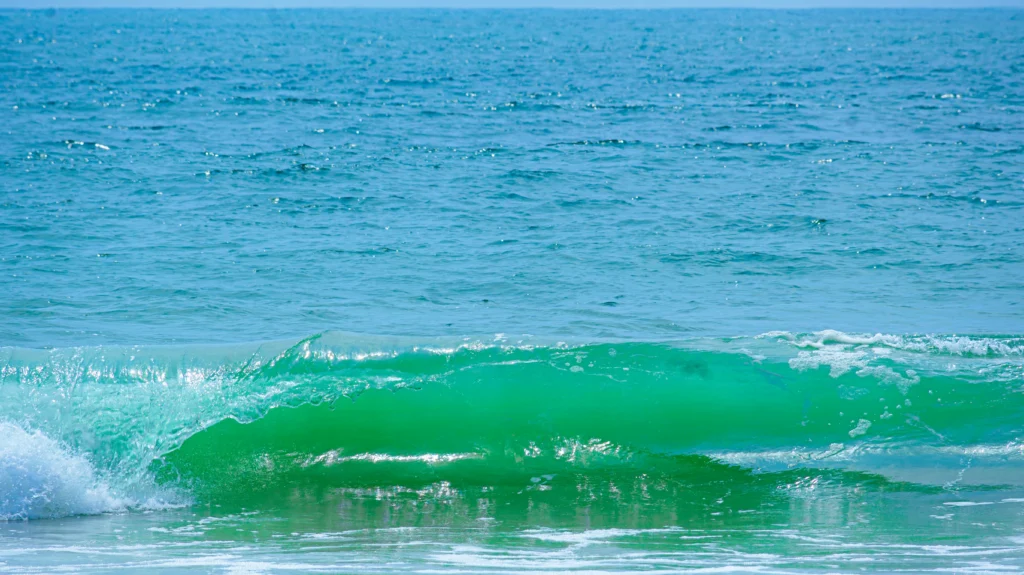
One of the most underrated beginner surfing tips is spending time on the beach just watching the ocean before you enter it. Understanding how waves form, break, and move is a skill that will dramatically improve your surfing.
What to observe from the shore:
- Where waves are breaking: Identify the peak (where waves start to break) and the shoulder (where they peel to the side)
- Wave direction: Is the wave breaking left, right, or closing out (breaking all at once)?
- Sets: Waves come in groups called sets. Watch for patterns — how many waves per set, and how long between them
- Rip currents: Look for darker, choppy water moving away from shore — this is a rip, and beginners should avoid it
Spending just 10–15 minutes observing before paddling out will make your session far more productive and safe.
Tip 5: Understand Ocean Safety — It Could Save Your Life
Ocean safety is non-negotiable for anyone learning to surf. The sea is powerful and unpredictable, and respecting it is the foundation of good surfing.
surfing for beginners: Essential ocean safety rules
Never surf alone. Always have a buddy or make sure a lifeguard or instructor is present.
Learn to identify rip currents. If caught in a rip, don’t panic and don’t swim against it. Swim parallel to the shore until you’re out of the current, then swim back in.
Hold onto your board. Your surfboard is your best flotation device. If you wipe out, cover your head with your arms and let the wave pass before surfacing.
Know your limits. Surfing in conditions beyond your skill level is the leading cause of beginner incidents. Start small, progress gradually.
Check surf forecasts. Websites and apps like Surfline, Magic Seaweed, and Windguru give you wave height, wind, and tide information. Learn to use them.
Tip 6: Get the Right Gear for Your First Surf Sessions
You don’t need to spend a fortune on gear when you’re just starting out, but a few key items will make your sessions more comfortable and enjoyable.
surfing for beginners Essential gear:
Surfboard: As discussed, a foam board or longboard (8–9 ft). Rent before you buy.
Leash: A leash attaches your ankle to the board so it doesn’t fly away when you wipe out. Non-negotiable for safety.
Wetsuit: Depending on your location and water temperature, a 3/2mm or 4/3mm wetsuit keeps you warm and extends your sessions significantly.
Wax: Applied to the top of your board, surf wax creates grip so your feet don’t slip. Use the right wax for your water temperature.
Rash guard: Protects against board rash and sun exposure. Wear one under or instead of a wetsuit in warmer waters.
Sun protection: Use reef-safe, water-resistant SPF 50+ sunscreen. The combination of sun, water reflection, and wind means you’ll burn much faster than on land.
Tip 7: Always Warm Up Before Surfing
Surfing works muscles you didn’t know you had. Paddling engages your shoulders, back, and core intensely. Popping up requires hip flexibility and leg strength. Going straight into the water cold is a fast track to injury.
surfing for beginners: A simple 10-minute warm-up
- Neck rolls and shoulder circles (30 seconds each)
- Arm swings and cross-body stretches (1 minute)
- Hip rotations and hip flexor lunges (2 minutes)
- Thoracic spine twists (1 minute)
- Squat pulses and dynamic leg swings (2 minutes)
- Practice pop-ups on the sand (3 minutes)
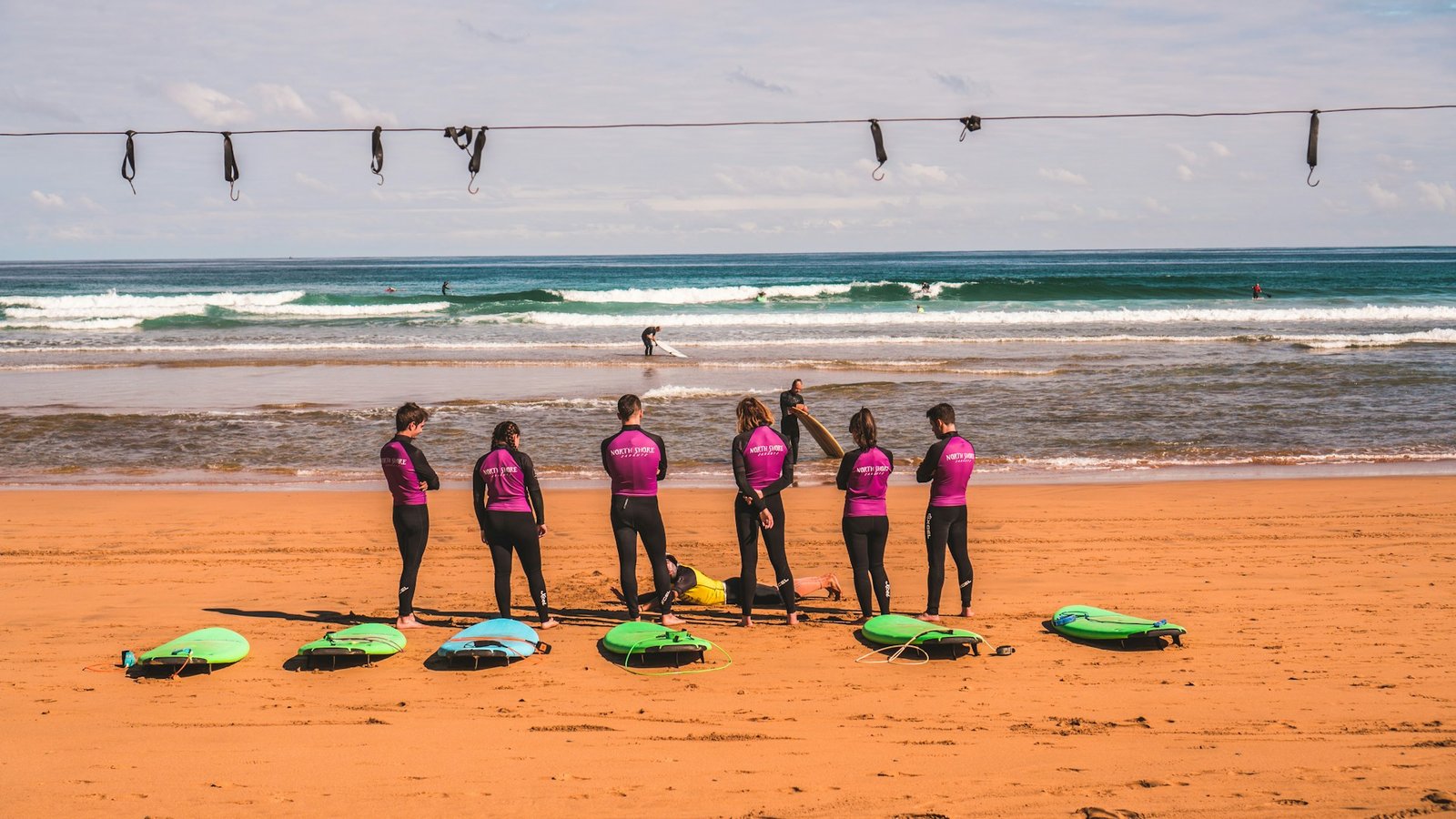
Warming up properly not only prevents injury but also primes your body for the explosive movements surfing demands. Our TSL Surf instructors always lead a group warm-up before every lesson — and we recommend you make this habit your own even in future solo sessions.
Tip 8: Start in the Whitewater — Not the Open Ocean
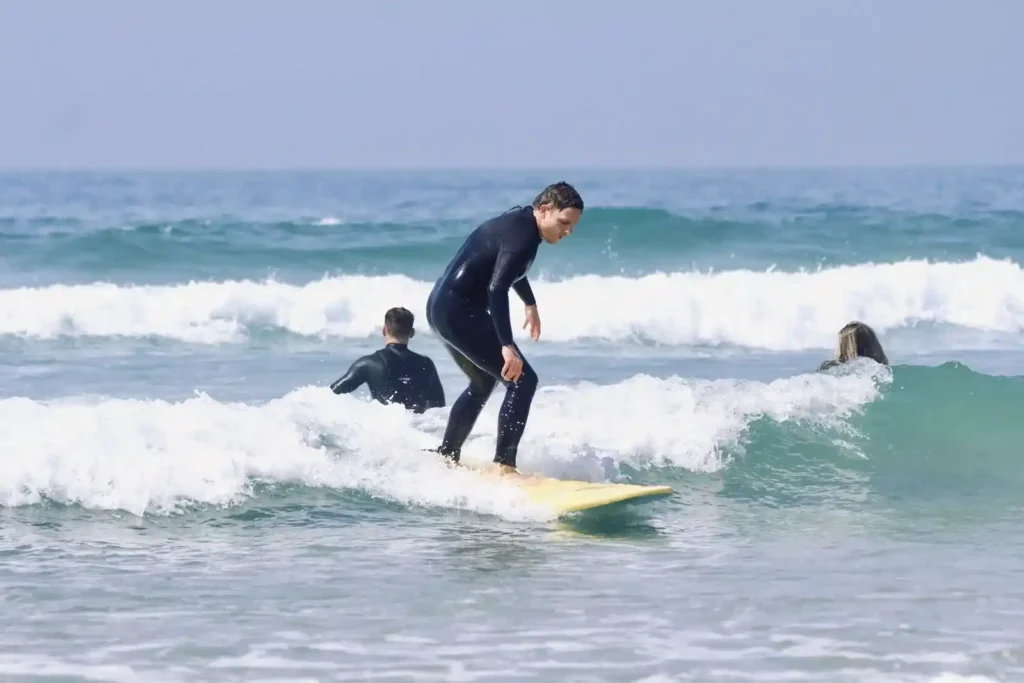
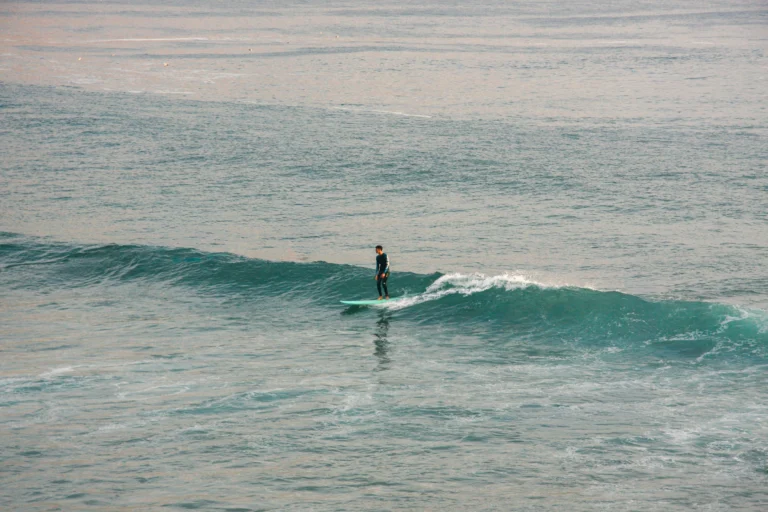
One of the most important pieces of advice for surfing for beginners: do not head straight to the line-up (where experienced surfers wait for unbroken waves). Start in the whitewater, also called the soup.
Whitewater waves are already broken — they push toward the shore in a foamy, slow-moving wall of energy. They’re perfect for:
- Practicing your pop-up in real conditions
- Getting comfortable with the feeling of a wave pushing your board
- Building confidence without the pressure of larger, unbroken waves
Spend your first few sessions exclusively in the whitewater. Once your pop-up is consistent and you can ride to the shore in a controlled stance, you’ll naturally be ready to progress to unbroken green waves.
Patience here pays enormous dividends. Surfers who skip this stage often develop bad habits that take months to correct.
Tip 9: Take a Surf Lesson with a Professional Instructor
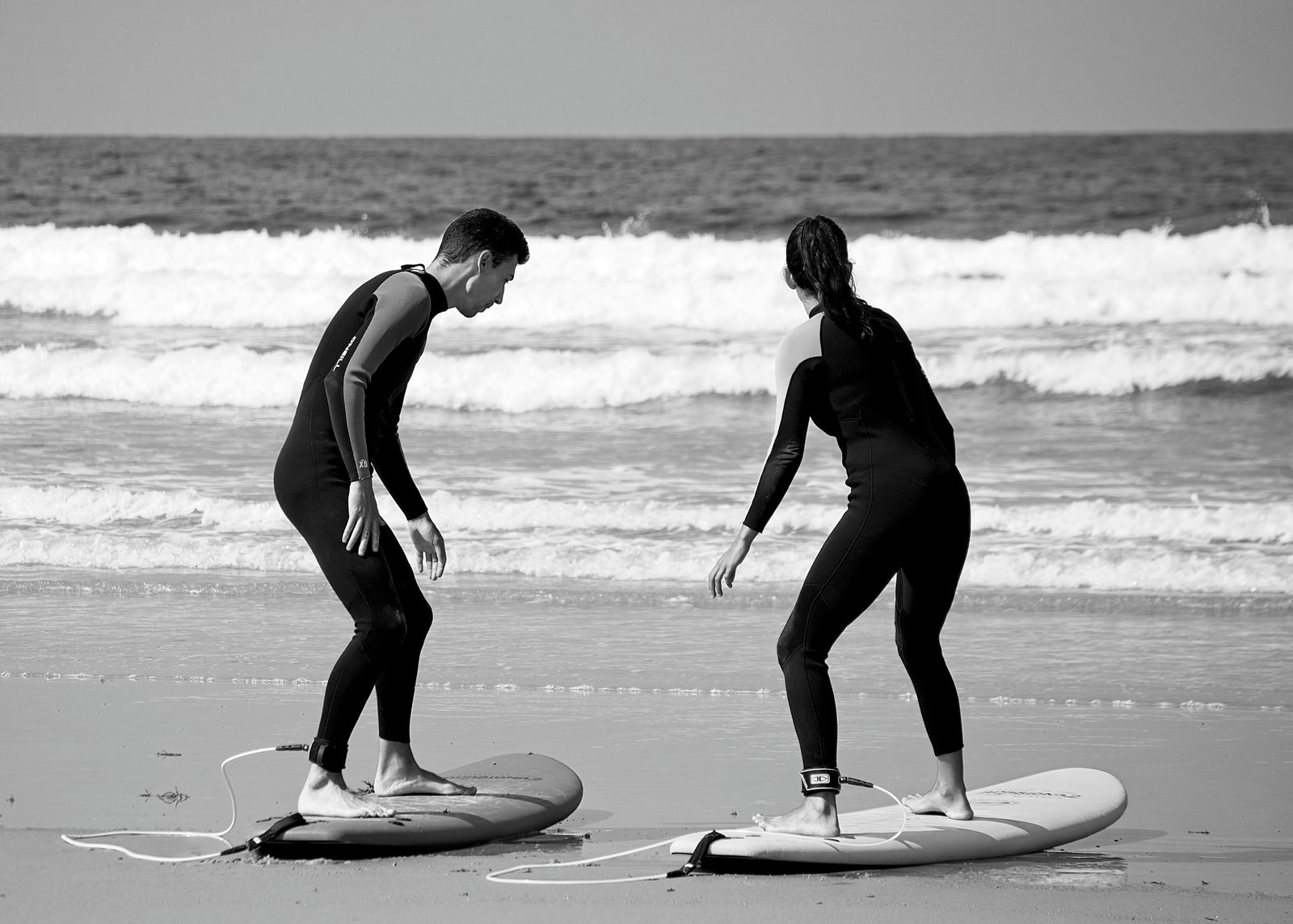
This is perhaps the single most impactful tip for surfing for beginners: book a lesson with a qualified surf instructor.
Trying to teach yourself from YouTube videos is possible, but research consistently shows that beginners who take professional lessons:
- Progress 3× faster than self-taught surfers
- Develop correct technique from the start (avoiding hard-to-break bad habits)
- Stay safer in the water
- Enjoy the experience more from the first session
A good surf instructor will assess your ability, give you the right board, guide you into waves at the perfect moment, and give real-time feedback you simply can’t get on your own.
What to look for in a surf school:
- Certified instructors (ISA, BSA, or national federation certified)
- Small class sizes (ideally 4–6 students per instructor)
- Quality equipment provided
- Emphasis on safety briefings
- Positive reviews from previous students
At TSL Surf, our instructors are fully ISA certified and passionate about making surfing for beginners succeed. Our beginner surf lessons are designed to get you standing up and riding waves in your very first session — guaranteed.
👉 Book Your First Surf Lesson with TSL Surf Taghazout →
Tip 10: Stay Consistent and Be Patient With Yourself
Surfing has a famously steep learning curve at the start, followed by exponential progression once the fundamentals click. Almost every surfer remembers the frustration of their early sessions — and also the incredible feeling when it all came together.
The truth about learning to surf:
- Your first 3–5 sessions will feel awkward and physically demanding
- Sessions 5–10 are when consistency starts to develop
- By session 15–20, most beginners are catching green waves comfortably
How to accelerate your progress:
- Surf as often as possible — ideally 3–4 times per week during a learning trip
- Watch yourself on video to identify what to correct
- Watch experienced surfers and study their technique
- Ask your instructor for feedback after every session
- Keep a surf journal to track your progress
Most importantly: celebrate small wins. Catching your first wave, however small, is a genuinely thrilling achievement. Enjoy every step of the journey.
Frequently Asked Questions About Surfing for Beginners
How long does it take to learn to surf? Most beginners can stand up and ride a wave in their first lesson. Building confident, consistent surfing on green waves typically takes 10–20 sessions depending on frequency and coaching quality.
What is the best age to start surfing? There’s no age limit to learning to surf. TSL Surf teaches students from ages 7 to 70+. The ocean doesn’t discriminate — all you need is enthusiasm.
Do I need to know how to swim to surf? Yes. We recommend that beginner surfers are comfortable swimming at least 50 meters unassisted. You don’t need to be an Olympic swimmer, but basic water confidence is essential for safety.
What’s the best time of year to learn to surf? It depends on your location. In Morocco (where TSL Surf is based), the best waves for beginners are from September to April, with consistent swells and warm temperatures year-round.
How fit do I need to be to start surfing? You don’t need to be an athlete. Basic fitness and swimming ability is enough to begin. Surfing itself will rapidly improve your fitness — especially your paddle strength, core stability, and flexibility.
Ready to Catch Your First Wave? TSL Surf School Is Here to Help
Now you have everything you need to start your surfing journey with confidence. From choosing the right board to reading waves, mastering your pop-up, and staying safe in the ocean — these 10 beginner surfing tips are your foundation for a lifetime of wave-riding.
But there’s no substitute for being in the water with an expert by your side.
TSL Surf Taghazout offers beginner surf lessons, and all-inclusive surf experiemce designed specifically for people starting from zero. Our certified instructors, top-quality equipment, and small group sizes mean you’ll progress faster and have more fun doing it.
👉 Book Your Beginner Surf Lesson Today →
📍 TSL Surf Taghazout, Morocco
📧 Booking@taghazoutsurflessons.com
Your first wave is waiting.